From a village near Prijedor to the Texas prairie, and onward.
One surname, carried unbroken across five generations and an ocean. This is the story and the record of the Gavranović family’s migration from Bosnia to Texas in 1907, and a standing invitation to anyone who still carries the name. Compiled by Kenneth Lee Gavranović.
A whole corner of Bosnia moved together toward the same Texas farm town.
In the summer of 1907, Ivan Gavranović, a Catholic farm laborer of about thirty-two, gathered his wife Frantiska and their three eldest children and left the only country they had known. Home was Prijedor, a town in the northwest of Bosnia, then an eastern outpost of the Austro-Hungarian empire.
Why so many left that corner of Bosnia at once is no mystery. For generations the Christian farmers of the Krajina had worked land they could not own, kmets bound to Muslim landlords under a feudal order that Austria-Hungary, on taking the province in 1878, left largely intact. Land hunger, heavy dues on every harvest, and the prospect of conscription into the emperor’s army pressed hardest on young farming families like Ivan’s. At the same time steamship agents worked the villages, a direct line ran from Bremen to Galveston, and letters home told of cheap, ownable Texas soil. By 1907, on the eve of the annexation that would tighten Habsburg rule in 1908, that pressure had become a wave, and whole neighborhoods left together.
They did not travel alone. On the eleventh of July they boarded the SS Hannover at Bremen, on the German North Sea coast. On the ship’s manifest, page 26, lines 17 through 21, the family is written out in a single hand: Ivan, 32; Franciska, 36; Franz, 14; Marie, 6; Tomáš, 4. Around them on the very same pages were neighbors from home. The Gregurek family, also of Prijedor, also bound for Sealy, Texas. The Mungiza family, Prijedor as well. This was no lone emigrant chancing the Atlantic; it was a community moving together.
Nearly four weeks at sea later, the Hannover reached Galveston on the sixth of August, 1907. From the Gulf the family travelled inland to Sealy, in Austin County, and settled in the small Czech-Catholic farming community of Frydek, a place that, by language and faith and habit, already felt like home.
Ivan’s brother Mihal stayed behind in Prijedor. His name on the manifest, listed as Ivan’s nearest relative in the country left behind, is the last thread still tying the family to Bosnia, and the beginning of a branch we have never met.
“Between the years of 1907 and 1931, Mr. Gavranovic lived in the Frydek community, coming here from abroad, Bosnia, in Jugo-Slavia. He was loved by everyone that knew him.”
The line, year by year
1875 → 2026
Ivan & Frantiska Gavranović
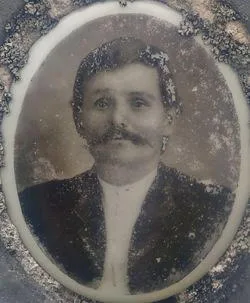
Ivan “Ivo” Gavranović
The immigrant ancestor. A farmer who signed his own name with the South-Slavic diacritic, Gavranović. He left his brother Mihal behind in Prijedor, crossed on the SS Hannover, and farmed at Frydek for 27 years.
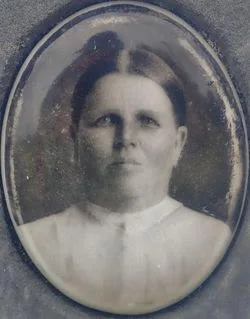
Frantiska “Fanny” Sojak Gavranović
A midwife in the Sealy and San Felipe area, she delivered her own grandson Paul Alvin in 1926. Her maiden name and Czech-inscribed headstone are the heart of the family’s identity puzzle.
He set out on foot to visit his daughter, and never arrived.
By 1931 Ivan had left Frydek. He spent his last years moving between his children’s homes, first with his son Joe at Hungerford, then, in early 1934, with Thomas at Wallis.
On Sunday, the eighth of July 1934, he set out on foot from Wallis to Frydek to visit his daughter Mary. He never reached her. He was found unconscious by the roadside near a neighbor’s home, carried to the Bogar house, and died there of heart failure without waking. He was fifty-nine years and six months old. They buried him in Frydek the following Monday, after a large funeral, beside the wife he had crossed an ocean with.
Among the mourners who came up from Hungerford was one Charles “Chas.” Gavranović, a name that had never appeared in the family’s papers before, almost certainly a brother who had crossed the Atlantic separately. One more thread, still waiting to be pulled.
The paternal line above runs unbroken from the immigrant Ivan to the family in Georgia today. But Ivan and Frantiska had five children, and the name fanned out across Texas and beyond, which is where you may find yourself.
Children & branches
Three children were born in Bosnia, two in Texas. Each one is a branch of the family, and a place a living descendant might recognize their own line.
Thomas Joseph Gavranović
Ken’s lineBrought to Texas at age four on the SS Hannover. Married Lillie Klecka in 1925 and worked for the Humble Oil & Refining Co. Father of Paul Alvin Gavranović, Ken’s grandfather, and the link in the direct paternal line.
Franz “Frank” Gavranović
The eldest son, age 14 on the 1907 manifest, and the family’s deepest mystery. He emigrated with the family, then all but vanishes. A Frank Gavranović was buried at Frydek in 1919; it may be him at twenty-six. Unresolved.
Mary Annie Gavranović Bogar
Born in Prijedor; married Paul Frank Bogar in 1923. Her son’s birth certificate, naming “Prijedor, Bosnia”, was the document that first proved the family’s origin. She died in a highway accident near Richmond, Texas.
Albert Joseph Gavranović Sr.
The first child born in Texas, about a year after the family arrived. Married Louise Kocurek in 1928, another marriage into the Czech-Texan Catholic community of Austin County.
Joe Paul Gavranović
The youngest, born in Sealy seven years after the crossing. He took his father Ivan into his home at Hungerford from 1931, and was the informant on Thomas’s 1948 records.
A South-Slavic name, a Bosnian origin, and a Czech home life.
The Gavranović family carries an unusual cultural fingerprint. The evidence pulls in two directions, and the likeliest reading reconciles both.
- The surname Gavranović, “of the raven”, written with the ć diacritic in Ivan’s own hand.
- Mary born in Prijedor (1900); Thomas born in Bosnia (1903).
- The 1907 manifest records the family’s race as Bosnian, last residence Prijedor.
- The 1934 obituary: “from abroad, Bosnia, in Jugo-Slavia.”
- The 1920 census records both Ivan and Frantiska’s mother tongue as Bohemian.
- Both headstones are inscribed in Czech.
- All five children married into Czech-Texan families.
- Frantiska’s maiden name, Sojak, is more common in Czech and Slovak lands.
Ivan was most likely a Bosnian Czech, part of the Catholic colonist population the Habsburg administration brought into the Prijedor region after 1878. Czech-speaking, Catholic, living near Prijedor, but bearing a South-Slavic surname. It explains why the family, on arrival, settled so naturally into the Czech-Catholic community at Frydek. Confirmation waits in a parish baptismal record from the Diocese of Banja Luka.
Gavranović, “of the raven,” and rarer than you’d think.
The surname comes from gavran, “raven” in the South-Slavic tongues, with the -ović ending meaning “son of.” It is an uncommon name, and its historic heartland is the Bosnian Krajina, the very region around Prijedor that Ivan left in 1907.
Mario Gavranović
Born in Lugano to Bosnian-Croat parents; 41 caps for Switzerland. Scored the dramatic equaliser against France at Euro 2020. From Gradačac, not Prijedor, no known relation, but proof the name travels.
Still over the shop doors
In Ivan’s home town the Gavranović name still trades, a furniture maker among them. Brother Mihal stayed in Prijedor; his line may run through here, and these may be our nearest cousins.
gavranovic.com
Bosnia → Texas → Georgia, compiled by Kenneth Lee Gavranović, the line you’ve just read. One documented branch of a name scattered across the world.
Wherever your branch came to rest, Zagreb, Sarajevo, Chicago, the Texas prairie, you belong on the list.
The doors we’ve found
If you’re tracing your own Gavranović line, or any Bosnian or Texas-Czech family, these are the archives and records that have moved this research forward.
Hamburg & Bremen departures
Hamburg’s 1850–1934 lists (on Ancestry) and the surviving Bremen 1907–08 lists (passengerlists.de) can name the exact village an emigrant left from.
Diocese of Banja Luka
Catholic parish registers for the Prijedor area, Župa sv. Antuna Padovanskog, record baptisms, marriages, and deaths. Partly digitized on FamilySearch.
Declaration of Intention, 1918
Filed at the Austin County court in Bellville, the single record most likely to name Ivan’s parents and birth village. Held by FamilySearch / Family History Centers.
Česká beseda & Prague archives
The Czech Association of Bosnia (Banja Luka) and the Czech Genealogical & Heraldic Society in Prague hold records of Czechs who settled in Habsburg-era Bosnia.
The open questions, and where you can help
If you carry the name or descend from a branch we haven’t mapped, any of these is a thread worth pulling.
Ivan’s parents
His father and mother in Prijedor remain unnamed. His 1918 Declaration of Intention is the record most likely to name them.
Frantiska’s origin
Czech or Bosnian Slav? Her maiden name and headstone say Czech; the manifest says Bosnian. Her marriage record would settle it.
The fate of Franz
The eldest son, age 14 on the 1907 manifest, then vanishes from the record. A Frank Gavranović died in Frydek in 1919, was it him?
Charles of Hungerford
Charles “Chas.” Gavranović attended Ivan’s 1934 funeral, almost certainly another brother who emigrated separately.
The Bosnian branch
Brother Mihal stayed in Prijedor. The Gavranović name continues there today, are these our cousins?
About the Gavranović name
What does the surname Gavranović mean?
A South-Slavic name meaning “son of the raven”, from gavran (“raven”) plus the patronymic suffix -ović (“son of”).
How do you pronounce Gavranović?
Roughly gah-vrah-NOH-vitch. The final “ć” is a soft “ch” sound.
Where does the name come from?
Its historic heartland is the Bosnian Krajina, around Prijedor in northwestern Bosnia. Most bearers today live in Bosnia and Herzegovina, then Croatia and Serbia.
Is it Croatian, Bosnian, or Serbian?
All three carry it, but it is predominantly Croatian. In Habsburg-era Bosnia, Roman Catholic Gavranovićs were generally ethnic Croats.
How rare is it?
Rare, carried by roughly 1 in 2.4 million people worldwide.
What are the common spellings?
Gavranović (with the diacritic), and the anglicized Gavranovic and Gavranovich. Related forms: Gavranić, and the root name Gavran.
Is there a Gavranović coat of arms?
No historical one. It’s a patronymic surname of rural, Catholic, South-Slavic origin, not a noble house, so any “family crest” sold under the name is decorative, not heraldic.
Can DNA testing help trace the line?
Yes. The name is rare and tightly clustered around Prijedor, so autosomal and Y-DNA tests can link Gavranović branches. If you’ve tested, get in touch, comparing results may connect us.
How this was put together
Compiled by Kenneth Lee Gavranović, a sixth-generation descendant of Ivan, from primary records and public archives, not secondary lore. It is an ongoing project; corrections and additions are warmly welcome.
Are you a Gavranović?
If you carry the name, married into it, or descend from the line, join our private family listserv. A quiet place for Gavranovićs to find each other, share records, and trade what we know.
This page documents one line, Bosnia to Texas to Georgia, but the listserv is open to every Gavranović, wherever your branch came to rest. Every message goes straight to Ken.
Don’t have the whole picture? Send whatever you have, a name, a date, a photo, a family story, and we’ll add it to the record.
Charles of Hungerford, Texas
The descendants of Franz, Mary, Albert & Joe